Being a teacher is the ideal profession for anyone who is chronically nosy (perhaps “perpetually inquisitive” would be the nicer way to put it). You are surrounded by people (the younger the better in this case) each day in your classroom who mostly don’t mind asking or entertaining any number of off-the-wall questions that would earn you sideways glances and a table by yourself if you were to pose them at a dinner party with age-appropriate peers. But step into a classroom of first graders and you’ll know within seconds of being in their presence that these kids are your eager traveling companions down any rabbit hole of inquiry. “Miss, why can’t we see our eyes?” “Does my guinea pig burp?” “What if we had tails?” “My tooth fell out; did it go to heaven?” are just a few of the questions I’ve been hit with by youngsters I’ve only newly met, and their boldness has rubbed off on me over the years. Those kids are on to something: you can begin to figure out what makes someone tick when you hear their answers to questions rarely asked.
Recently on the first day of the semester I asked my college-aged students to complete the statement “You can tell a lot about someone by….” Their responses provided a glimpse into their priorities and personalities as well as an open door to conversation among them. It’s decidedly more difficult to get a group of adult strangers to “turn and talk with a neighbor” than it is elementary-aged ones, but when responses such as “You can tell a lot about someone by what toppings they put on their pizza,” “…by whether they return shopping carts to the designated spot,” “…by how they treat children and old people” were called out, the buzz of discussion was lovely and rare in a generation that seems to prefer to communicate through safe, carefully edited digital platforms.
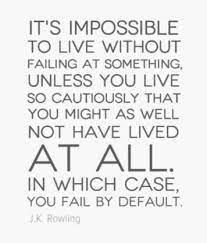
Terms such as “resiliency, “growth mindset,” and “grit” are the buzz words du jour in our culture at large and specifically in the world of education, and it is hard to argue against the value of possessing any of these qualities. The question for teachers and parents is, “How do we foster the kind of growth in young people that encourages curiosity, motivation, and healthy risk taking?” A study by Nim Tottenham and Regina Sullivan at Columbia University found that young people are designed to take risks and avoiding them leads to anxiety. The job of parents and teachers, then, is to provide safe spaces in which young people can take risks (and to be clear, “taking risks” means speaking up in class, trying out for a spot on an athletic team, and so on, not leaping from the top of the monkey bars or trying to Frogger across a busy street) and even fail in order to learn that, whatever the outcome, they will survive. Henry Ford defined failure as an opportunity to begin again more intelligently, and the earlier in life we learn that we certainly will fail from time to time the more inclined we are to step from the sidelines of our own lives and get into the game.
That safe space I mentioned earlier is crucial and non-negotiable. If I asked you to recall a time you were put on the spot, felt exposed, or were on the receiving end of ridicule, I’ll bet you a fancy Starbucks coffee that several instances popped into your mind. If we don’t want our children to become adults whose memories hold similar experiences, we will commit to creating environments where if they mispronounce a word while reading, no one mocks them; if they don’t know how to do something, they will feel empowered to say so because they know that someone will be on hand to teach them. This is not the same as being a “helicopter” or “lawn mower” adult, where we human shield kids from consequences and from learning how to handle mistakes; rather, it is letting them see that the adults are committed to teaching respect and expecting it from individuals in a child’s world.
Carol Dweck’s Mindset: The New Psychology of Success informs us, through extensive research, that we are mainly limited by what we think we can do and having enough creative confidence to explore new ideas. Her message is that 1) everyone has the fundamental ability to be creative and innovative, and 2) not everyone has nurtured these capabilities to the same degree. It might well be a bit of oversimplification of a condition to say that if we’d like to parent, teach, or coexist with humans who possess curiosity and a sense of purpose that we need to encourage them to step into the world and engage with it in honest and meaningful ways. Each situation is different, of course, and it’s a challenge with more nuances than I have addressed here. But maybe, just maybe, we could begin by asking some unorthodox and unexpected questions favored by children world-wide: “In the old days, was everything black and white?” “Why does Dad have a beard under his arms?” “Why do I need two eyes to see one thing?” Sure, it might earn you a table by yourself at the dinner party, but it’s so worth the risk!
 PartWolf