The ubiquity of and access to social media have made armchair philosophers of us, and while it can become tiresome when oft-shared bites of wisdom in the form of catchy memes flood our newsfeed, if having a ready-made audience of “friends” encourages some sincere reflection and self-awareness, then bring it on, I say.
Among the more popular ways we can be tempted to humble brag about our evolution and enlightenment is the good old “Letter to My Younger Self.” We’ve all seen these. Some are clever or touching. Some are passive aggressive jabs at those (who we know will be reading) who’ve treated us poorly. And come on, those in the latter category can possess such a delicious cringe factor that it’s hard to resist grabbing the popcorn, pulling up a chair, and indulging our need for some secret schadenfreude.
I think turning 50 a few months ago and being on the verge of a big life change this year has had me asking myself “How did it get so late so soon?” more frequently than I used to. Time is not a renewable resource, and when you’re staring down your later years it serves no purpose to waste it on regrets of how it should have been better used. I’ve wondered if by writing out the advice I wish I’d heeded along the way I can somehow purge my need to replay those moments of my supreme ignorance that (unfortunately) haven’t been restricted to my youth.
Once when I was talking with my dear friend of 35 years and speaking pretty harshly about myself, she asked, “Would you say these things to me?” “Of course I wouldn’t say them to you; I love you too much!” I answered. “Why, then, would you speak so hatefully to yourself?” she wondered. And so my advice to the younger me is as free of recrimination as I can manage, considering the ways I have given away years of my life to pursuits that did not deserve them.
I would tell young me to figure out who she is, what she values, and what payment she would like to make to the world (on a small or large scale) in exchange for her existence. There is more to life than fitting in, especially if “fitting in” means concealing any part of one’s identity. This is such a tough one. It’s especially daunting in youth, for sure, when we’re trying our hardest to cloak our perceived weaknesses and anything that makes us stand out from the pack of our peers who are every bit as wary as we are about calling the wrong kind of attention to ourselves.
There was a time when I just knew in the depths of my soul that if I only had a Members Only jacket like “everyone else,” then I would gain entrance into the inner circle of middle school cool girls. My curly hair did not cooperate with the center-part, feathered sides style that was standard issue and so my only hope for assimilation rested in possessing that coveted coat that apparently only “members” could attain. Alas, I never participated in the club whose affiliates donned snazzy, snap- and zipper-covered windbreakers.
I think this early and often traumatic indoctrination into groupthink can extinguish our desire to speak up, think differently, or question what is “normal.” I would ask young me to hold onto that tendency toward curiosity and respectful questioning of what is versus what could or should be. It is when we know who we are and what we value, in the absence of coercion or the crushing need to “belong” poisoning our ability to think for ourselves, that we find peace. The advice Polonius issues his son Laertes, “This above all—to thine own self be true,” is what I would say (although far less eloquently) to young me. More likely, I’d have put it, “Stay weird, kid!”
The last piece of advice I would share with young Sam is to allow only people who can be true to themselves and to her to occupy her “circle of trust.” And perhaps, for me anyway, the best way to determine a person’s nature is by observing their actions. People who do not value us will inevitably show us with their behavior. To be clear, we all have bad days, and mistakes will be made even by those who treasure us. But watch how people behave when conflicts arise (and they certainly always will even in the healthiest relationships), when it’s no longer easy or convenient to treat the relationship as a priority, or when there are moments we need them to provide comfort, acceptance, and encouragement. And to borrow the wisdom of Maya Angelou, I would tell young me that “when people show you who they are, believe them the first time.” I would tell her to know herself, know what she holds dear, and never to compromise those, but always to be open and receptive to imrovement. And never to be a reason someone loses faith in the possibility of love or goodness in the world.
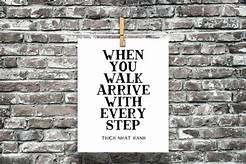
I want middle-aged Sam to know that even without this hard-earned wisdom shared earlier in her life (because truly, how many of us ever listen to the future-seeing Cassandras who desperately want to spare us the pain our stupidity will inflict?) that inherent in each moment, each step, is the possibility of grace and growth.
 PartWolf
This is lovely! And from where I was sitting, young Sam was amazing! Even without the jacket!
LikeLike
I hope you know that young Chris gave me so much courage and inspiration! You were the first person I knew who never denied her talent and intelligence, but wore them both with such humility that it empowered others to do the same.
LikeLike